
Why Industrial Parts Become Obsolete Before the Equipment Does
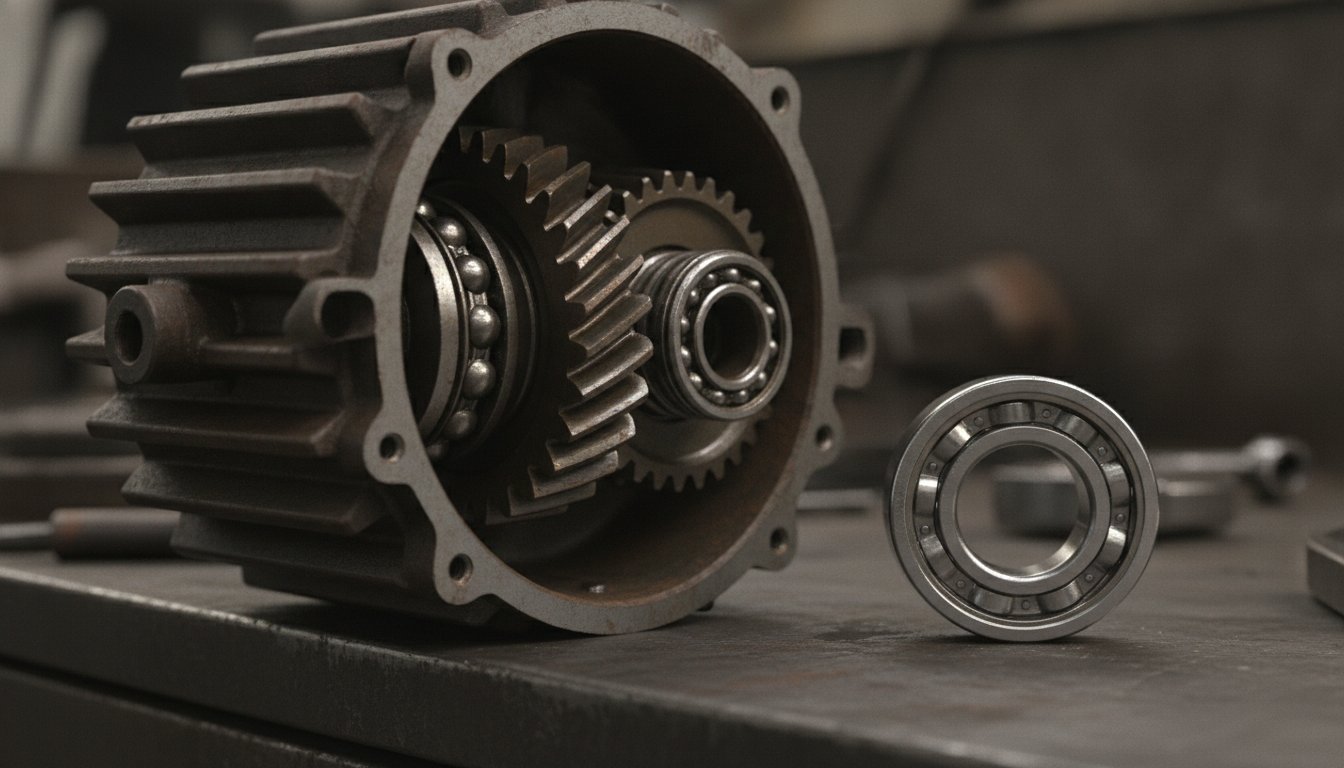
Industrial machinery is frequently built to last for decades. Heavy-duty gearboxes, electric motors, and structural frameworks can easily outlive their original expected lifespans through proper maintenance and rebuilds. However, the individual components that make up these assemblies—such as specific bearings, seals, drives, or electronic controllers—often face obsolescence much earlier. This creates a significant challenge for maintenance and procurement teams who are tasked with keeping legacy equipment operational.
Why Components Outlive Their Welcome in the Catalog
Part obsolescence is rarely a reflection of a component's mechanical durability. Instead, it is driven by market forces, technological advancements, and manufacturer lifecycle management. When an original equipment manufacturer (OEM) designs a machine, they specify parts based on what is currently available and cost-effective. Over the years, those specific parts may be phased out by the component manufacturer for several reasons:
- Technological succession: A bearing manufacturer might introduce a newer seal design or a more efficient internal geometry that replaces the older generation. While the new bearing fits the same shaft, the old part number is retired.
- Consolidation: Manufacturers routinely consolidate their product lines to streamline production. They may replace ten slightly different bearing variants with a single universal replacement that meets or exceeds all previous specifications.
- Material changes: Shifts in material availability or environmental regulations can lead to the discontinuation of certain lubricants, seal materials, or coatings, prompting a part number change.
- Electronics lifecycle: Automation and electrical components, such as variable frequency drives or programmable logic controllers, have much shorter design cycles than mechanical equipment. A drive model might only be manufactured for five to seven years before being replaced by a newer generation with different communication protocols or footprint dimensions.
Because the industrial equipment itself is not subject to these rapid market shifts, it remains in service while the exact components it was built with disappear from standard catalogs.
Understanding Exact Specifications and Interchangeability
When a part goes obsolete, the first step for a maintenance team is determining whether a direct interchange exists. This requires moving beyond the OEM part number and understanding the exact functional specifications of the required component. For mechanical parts like bearings and power transmission products, this means knowing the critical dimensions, load ratings, speed limits, and internal clearances. An obsolete bearing might have a direct drop-in replacement from a different manufacturer, but verifying this requires access to comprehensive cross-reference data.
For electrical and automation components, interchangeability is more complex. A replacement drive must match not only the power requirements but also the control logic, communication protocols, and physical mounting dimensions. In some cases, an exact match is impossible, requiring the procurement team to source a modern equivalent and plan for minor adaptations or reprogramming during installation.
Procurement teams often face friction when relying on OEM part numbers alone. OEMs may mark up proprietary part numbers or have long lead times for legacy support. By breaking down the requirement into its base engineering specifications, buyers can open up the global supply chain to find equivalent components from hundreds of different manufacturers.
Proactive Strategies for Maintenance and Procurement
Dealing with obsolescence requires a shift from reactive purchasing to proactive sourcing. Maintenance teams can implement several practical strategies to minimize downtime caused by obsolete parts:
- Maintain a specification database: Instead of relying solely on OEM part numbers in the CMMS (Computerized Maintenance Management System), record the base specifications for critical components. For a bearing, this includes bore diameter, outside diameter, width, and cage type. This data allows for rapid cross-referencing when the original part number is no longer available.
- Identify critical spares: Not all obsolete parts cause immediate operational stoppages. Prioritize sourcing efforts for single-point-of-failure components where no temporary workaround or bypass exists.
- Source globally: Obsolescence in one regional market does not always mean the part is unavailable globally. A specific bearing or drive might be obsolete in North America but still actively manufactured or stocked by a distributor in Europe or Asia.
- Look for aftermarket equivalents: Many industrial components are manufactured to standardized dimensions (such as ISO or ANSI standards). Identifying these standards allows procurement teams to bypass the OEM and source directly from component manufacturers who produce equivalent parts.
By focusing on the engineering requirements rather than a specific brand name, maintenance teams can often find components that meet or exceed the performance of the original part.
Managing part obsolescence is an ongoing reality for industrial maintenance. When you encounter an obsolete bearing, drive, or automation component, having a sourcing partner who can navigate global supply chains and cross-reference exact manufacturer specifications is critical. If your team is struggling to find a replacement for a discontinued industrial component, reach out to our sourcing specialists to help identify the exact equivalent your equipment requires.
Need a quote on a specific part?
Request a Quote